
The House Always Wins? Why Smart Players Still Love the Game
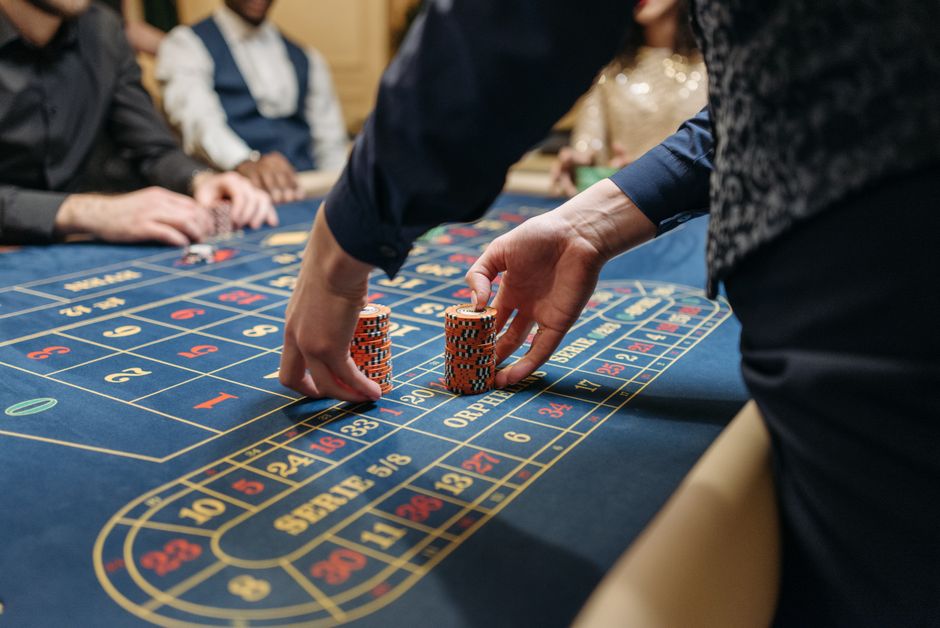
Ask anyone who's spent a Friday night watching a slot reel spin or sweating a river card, and they'll tell you the same thing: this isn't just gambling. It's a hobby with its own vocabulary, lore, and rhythms. The iGaming world — casinos, sportsbooks, poker rooms, slots — is now a $100 billion-plus global industry, and yet most of the writing about it is either breathless hype or finger-wagging moralizing. Neither is useful. What is useful is a clear-eyed look at how the different verticals actually work, where the real skill edges hide, and how to treat the whole thing like an adult pastime rather than a get-rich-quick scheme.
Let's dig into each major corner of the space, because they reward very different kinds of players.
Slots: The Simplest Game and the Most Misunderstood
Slots are the workhorse of every online casino, often accounting for 70–80% of total gaming revenue. They're also the game people understand least. Modern video slots aren't mechanical reels — they're random number generators (RNGs) that run millions of outcomes per second. The spinning animation is pure theater; the result is locked the instant you hit spin.
The number every player should know is RTP — return to player. A slot with a 96% RTP returns, on average, 96 cents on every dollar wagered over millions of spins. That 4% is the house edge, and it's baked in. But two slots with identical RTP can feel completely different because of volatility.
- Low volatility: frequent small wins, grind-friendly, good for stretching a bankroll (think Starburst at 96.1%).
- High volatility: long dry spells punctuated by huge potential payouts (think Book of Dead or Money Train 3, where a single bonus can return 10,000x).
A practical tip: check the paytable and the max win before you spin. If a slot caps at 5,000x and you're chasing a life-changing hit, you're playing the wrong game. Also, bonus buys — paying 100x your stake to trigger free spins instantly — are almost always worse value than triggering the feature naturally, because the buy price usually has a higher effective house edge than the base game. You can read more about it on xoilac.
Table Games: Where the Math Becomes Learnable
If slots are a lottery ticket with entertainment value, table games are where a thinking player can actually reduce the casino's edge. Blackjack played with basic strategy — a chart that tells you exactly when to hit, stand, double, or split — cuts the house edge to roughly 0.5%. That's a massive difference from an 8% edge on a slot.
Three things separate sharp table players from the rest:
- They memorize basic strategy. It's not hard. Fifty or so decisions cover 99% of hands.
- They avoid bad side bets. Perfect Pairs, 21+3, and similar propositions typically carry a 5–10% house edge. Fun, but not where your money should live.
- They understand variance. Even a 0.5% edge player can lose eight sessions in a row. Bankroll management is the real skill.
Roulette is similar. European single-zero roulette has a 2.7% house edge; American double-zero roulette has 5.26%. If you're going to play, always pick single-zero — it's the same game with half the bleed.
Poker: The Only Game You Can Actually Beat Long-Term
Here's the uncomfortable truth for casinos: poker is the one game where the house doesn't play against you. It just takes a rake. That means a skilled player can be a consistent winner — and an unskilled player can lose far faster than they would at any slot.
The modern poker landscape has shifted hard toward solvers and GTO (game theory optimal) play. Ten years ago, a decent read on your opponents was enough. Today, even micro-stakes regs have studied preflop charts and bet-sizing trees. If you're getting into poker seriously, expect to spend as much time studying as playing. Tools like GTO Wizard and PokerTracker have become standard, and ignoring them is a fast route to being the fish at the table.
For casual players, the better path is often tournament poker — specifically low-stakes Sit & Go's or Sunday micro-MTTs. The rake is lower relative to the prize pool, and the variance, while brutal, is survivable with a disciplined bankroll (usually 50–100 buy-ins for tournaments).
Sports Betting: Information, Line Movement, and Closing Value
Sports betting has exploded since the U.S. Supreme Court struck down the federal ban in 2018. It's now legal in 38 states plus D.C., and operators spend billions on advertising. The trap for newcomers is that sportsbooks are extraordinarily good at pricing. The vig — usually around 4–5% on a standard two-way market — is how they guarantee profit regardless of the outcome.
There are exactly three realistic ways to beat sports betting long-term:
- Line shopping. The difference between -110 and -105 on the same bet is enormous over hundreds of wagers. Always have accounts at multiple books.
- Closing line value (CLV). If you consistently beat the closing line, you're a winning bettor over time. Track it religiously.
- Specialization. Sharp bettors pick a niche — a single league, a single market like prop bets, a single team — and know it better than the book's model does.
Chasing promos and sign-up bonuses is fine, but treat it as a side hustle, not a strategy. The books know exactly how to price those offers.
Bankroll, Discipline, and the Real Edge
Across every vertical, the same principle applies: the players who last are the ones who manage money like it's a separate skill. A few rules that hold up regardless of what you play:
- Never gamble with money you need for rent, food, or bills.
- Set a session loss limit before you start, and leave when you hit it.
- Track every deposit and withdrawal. If you can't explain your results, you don't know if you're winning.
- Use deposit limits and time-out tools that every regulated operator offers. They exist for a reason.
Why People Keep Coming Back
The iGaming industry is often framed as a predator-prey dynamic, but that flattens something real. For most players, the appeal isn't the money — it's the concentration, the puzzle, the brief suspension of ordinary time. A good sports bet makes a meaningless midweek game matter. A poker session is a live psychological experiment. A slot bonus is pure, unfiltered anticipation.
The honest conclusion is this: the house edge is real, and over enough spins or hands, it will grind you down. But a player who understands volatility, shops lines, learns basic strategy, and treats bankroll like a tool rather than a war chest can enjoy this hobby for decades without being ruined by it. The people who get hurt are almost always the ones who never bothered to learn how the games actually work. Don't be one of them.


Explore insulation options, ventilation and heating choices that keep a timber garden room comfortable through every British season.
Understand clear, knotty and finger jointed boards so you can select cladding that suits your budget, style and exposure.
Discover when to treat, clean and inspect cedar surfaces to prevent grey weathering, mould and moisture damage over time.
Follow gentle cleaning methods and restorative finishes that bring faded cedar back to a warm, healthy and protective condition.